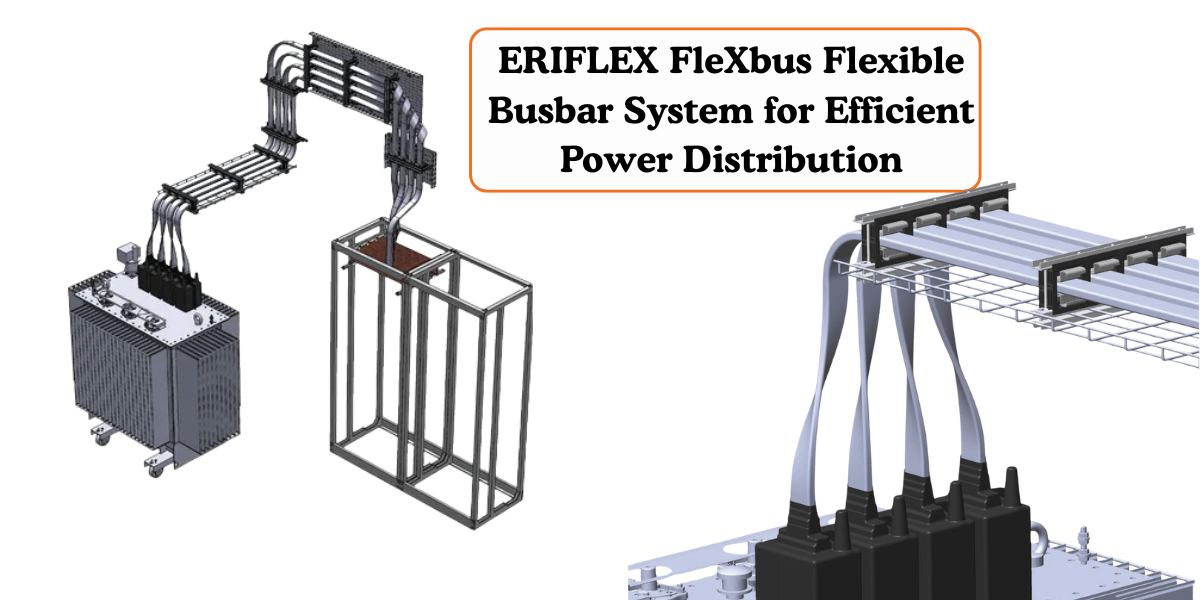
ERIFLEX FleXbus Flexible Busbar System for Efficient Power Distribution
As electrical infrastructure continues to evolve, today’s projects demand solutions that are efficient, safe, and space-saving. Traditional power cables often struggle in compact panels or high-current applications. That’s where ERIFLEX FleXbus comes in—a smart, modern alternative designed to simplify power distribution without compromising performance.
What Is ERIFLEX FleXbus?
ERIFLEX FleXbus is a flexible, insulated copper busbar system that replaces conventional cables and rigid busbars. Its flexible design allows smooth routing even in tight spaces, making installation faster and more organized—especially in complex electrical layouts.
Why Choose ERIFLEX FleXbus?
- High-conductivity copper for reliable current flow
- Flexible and bendable design for easy routing
- Compact profile that saves valuable panel space
- Low voltage drop, reducing energy losses
- Fire-retardant, halogen-free insulation for enhanced safety
- Strong short-circuit withstand capacity for dependable performance
How FleXbus Improves Power Distribution
- Higher Energy Efficiency
Optimized conductor design reduces resistance and heat buildup, helping systems operate more efficiently than traditional cables. - Better Space Management
Its slim, flat design is perfect for crowded panels, switchboards, and control cabinets where space is always at a premium. - Faster & Neater Installation
Say goodbye to bulky cable bundles. FleXbus installs quickly, reducing labor time while keeping panels clean and well-organized. - Improved Thermal Performance
Efficient heat dissipation ensures stable operation even at higher current loads, enhancing overall system reliability.
Where ERIFLEX FleXbus Is Used
- Electrical panels & switchboards
- Commercial & residential buildings
- Industrial plants & factories
- Data centers
- Renewable energy systems
- Infrastructure & utility projects
FleXbus vs Traditional Cables
ERIFLEX FleXbus | Conventional Cables |
Compact & flexible | Bulky & rigid |
Lower heat losses | Higher heat generation |
Faster installation | Time-consuming setup |
High current density | Limited current capacity |