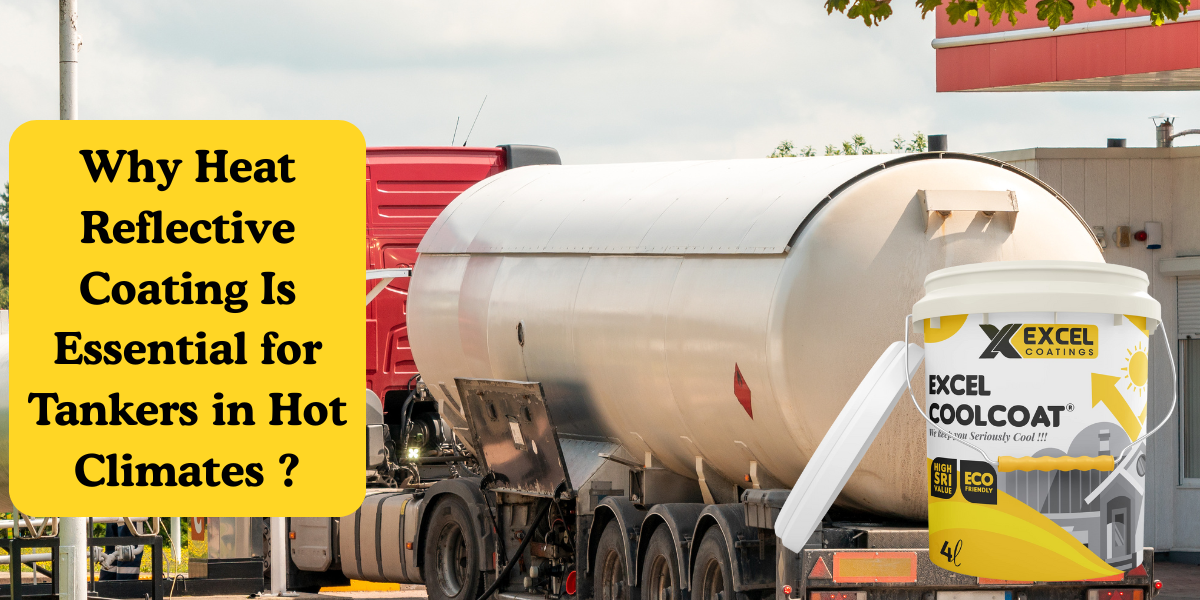
In hot climates, tankers—whether used for water, fuel, chemicals, milk, or edible oils—are constantly exposed to intense sunlight and high ambient temperatures. This exposure can significantly affect product quality, safety, and operational efficiency. Heat-reflective coating offers a smart, cost-effective solution to these challenges.
- Reduces Internal Temperature
Heat reflective coatings are designed to reflect a large portion of solar radiation, preventing excessive heat absorption. This helps maintain a lower internal temperature inside the tanker, even under direct sunlight.
Result: Better temperature stability for stored liquids and materials.
- Protects Product Quality
High temperatures can:
- Degrade chemicals and fuels
- Promote bacterial growth in water or milk
- Alter viscosity and composition of liquids
By reducing heat buildup, reflective coatings help preserve product integrity and extend shelf life during transportation and storage.
- Enhances Safety
Excessive heat increases risks such as:
- Pressure buildup inside tankers
- Evaporation losses in fuel tankers
- Potential leaks or structural stress
Heat-reflective coatings lower surface temperature, reducing thermal stress and improving overall operational safety.
- Improves Energy Efficiency
Tankers that rely on active cooling or insulation consume more energy. By minimizing heat gain naturally, reflective coatings reduce the need for additional cooling systems.
Result:
✔ Lower fuel or power consumption
✔ Reduced operating costs
- Extends Tanker Life
Continuous heat exposure can cause:
- Metal fatigue
- Faster corrosion
- Coating and paint degradation
Heat-reflective coatings protect the tanker body, extending asset life and reducing maintenance costs.
- Ideal for Indian & Tropical Conditions
In regions with long summers and high UV intensity, heat-reflective coatings are especially effective for:
- Water tankers
- Fuel & chemical tankers
- Food-grade tankers
- Industrial transport vehicles
Conclusion
Heat-reflective coating is not just an add-on—it’s a practical necessity for tankers operating in hot climates. It improves safety, efficiency, durability, and product protection, making it a smart investment for transporters and fleet owners.